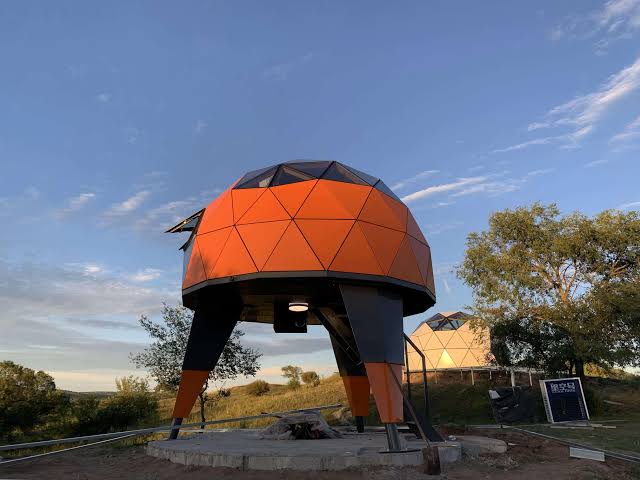
In China’s fast-growing cities, privacy, sleep, and convenience are harder and harder to find — especially for on-the-go travelers. That’s exactly the problem Capsule Castle is solving. What started as a small, pod-sized resting solution is now being considered a scalable and technology-driven startup idea.
Capsule Castle is not a conventional capsule hotel. It’s a line of tiny, robotic, app-controlled capsules that people can hire for short naps, noise-free work sessions, or even solo study sessions — all on hourly basis. The company doesn’t expect long-term stays. It makes money on high volume, quick turnarounds, and many daily users who want comfort at the fraction of a full hotel booking cost.
Why Capsule Castle Works
Capsule Castle works because it’s designed for life in the cities of the future. In cities like Qingzhou or Suzhou, people often don’t want to pay for hotels; they just need an hour to sleep, recharge their batteries, or make a private phone call. Capsule Castle provides them all of these in a clean, quiet, and modern pod.
They install each capsule in high-traffic locations — including train stations, shopping malls, and university vicinity. The low setup cost and the self-service access system mean that the company does not need many employees or expensive properties.
The Business Model
This is where the magic of the startup happens. Capsule Castle generates revenue through repeated and frequent usage. One pod will get 10 to 16 people a day, and each one usually pays ¥30 to ¥50 (₹350–600) per session. Most of the pods will pay for themselves within 6 to 8 months, which is rare in the hospitality sector.
Key Figures:
- Initial cost per pod: ¥25,000–¥40,000
- Average monthly income per pod: ¥12,000–¥20,000
- Break-even point: 6–8 months
- Labor needed: Minimal or none (totally app-based entry)
This is an efficient, scalable, and fit model for small towns as well as big cities, which is great for both founders and franchise partners.
Who’s Using It?
Capsule Castle is made for a wide range of city people who need individual space in shared places. That includes solo travelers, students, gig economy workers, remote employees, and fatigued shoppers.
In a mini user survey done in 2024 in three cities:
- 68% used the pod for napping
- 52% booked it to attend online classes or meetings
- 71% mentioned that it was more comfortable than hotel lobbies or cafes
Expansion Across China
Having had only a few pods in 2022, Capsule Castle expanded to more than 15 cities in 2025 with more than 500 pods installed. Expansion has been in the works — targeting cities with a rising middle class and limited budget stay options. Qingzhou, Yantai, and Nanjing were good places because they had a mix of students, workers, and frequent travelers.
To expand faster, the brand introduced a franchise model. Store owners or small investors can accommodate a pod in their unit and earn monthly revenues through sharing profits with Capsule Castle. The startup provides the software, branding, and backend infrastructure, and the partner manages the space.
Challenges on the Way
Of course, every startup comes with its problems. At Capsule Castle, sanitation and frequent maintenance are of utmost importance. The employees must also handle technical malfunctions promptly — like doors that do not unlock or payment breakdowns. Some customers are not comfortable spending time in that small a space, so opening up the pod, keeping it clean, and well-ventilated is one of the design challenges.
Location permissions are a second issue. Some public areas restrict such installations, and thus, every new city rollout demands careful planning and authorization at the local level.
Last Word: Small Pods, Great Potential
Capsule Castle is showing how the future of convenience and comfort can be stuffed into just square meters. With low costs, high use, and smart tech, this company is turning bland waiting areas into money-making urban assets.
It is more than just a home away from home, Capsule Castle being an entrepreneurship strategy — showing that if you solve a small problem for a massive segment of society, even pod-sized box can build an empire.