Tulsi Gowda was an environmentalist from a village called Honnali in Karnataka. She was born into the Halakki tribe around 1937 or 1938. Although she grew up without formal schooling, she possessed an extraordinary knowledge of local flora. Her people referred to her as the “tree goddess,” and she was known as the “Encyclopedia of the Forest.” She spent more than 60 years regenerating the land by planting saplings, caring for forests, and using traditional knowledge.
“I have spent my whole life in the forest. I know each tree and plant like my own children. When I touch a sapling, I can tell if it needs more water, more shade, or more care. The forest has taught me everything—patience, kindness, and how to live without harming the earth. My only wish is that people plant trees and never cut them without need. If we take care of the forest, it will take care of us for generations,” remarks Tulsi
A Childhood Rooted in Nature
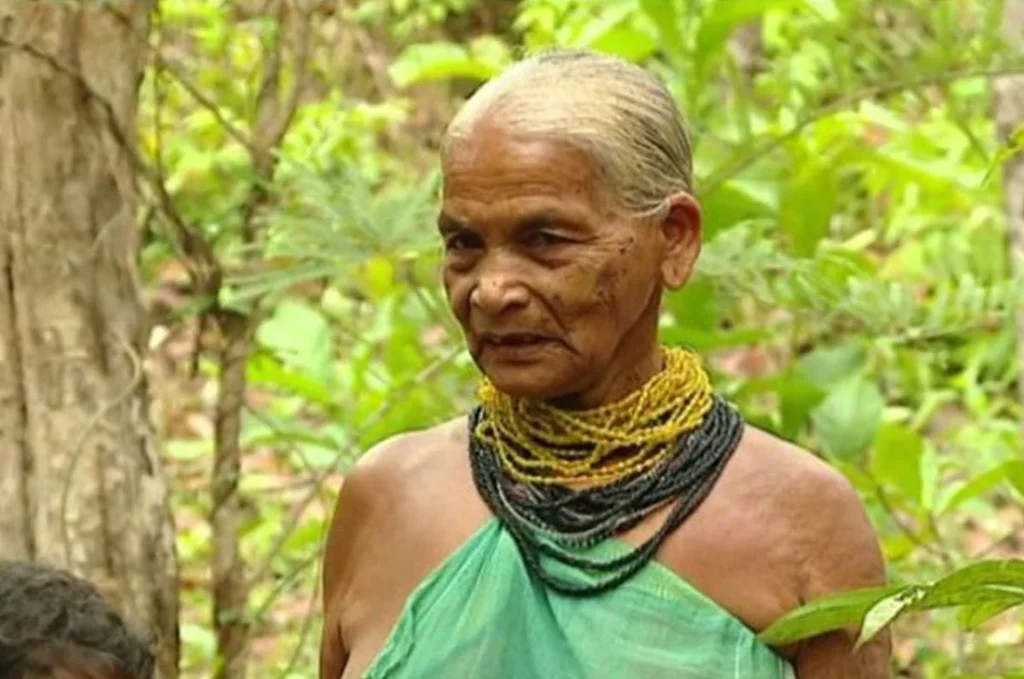
Tulsi was born into a poor tribal family. She lost her father when she was very young. She started working with her mother as a daily wage worker in a nearby forest nursery without any formal schooling. Through practical experience, she learned how to take care of seeds and saplings. She learned from the land itself what most people know from books. She developed a close relationship with the forest as a result of this early, deep connection to nature.
A Lifetime of Planting and Protecting
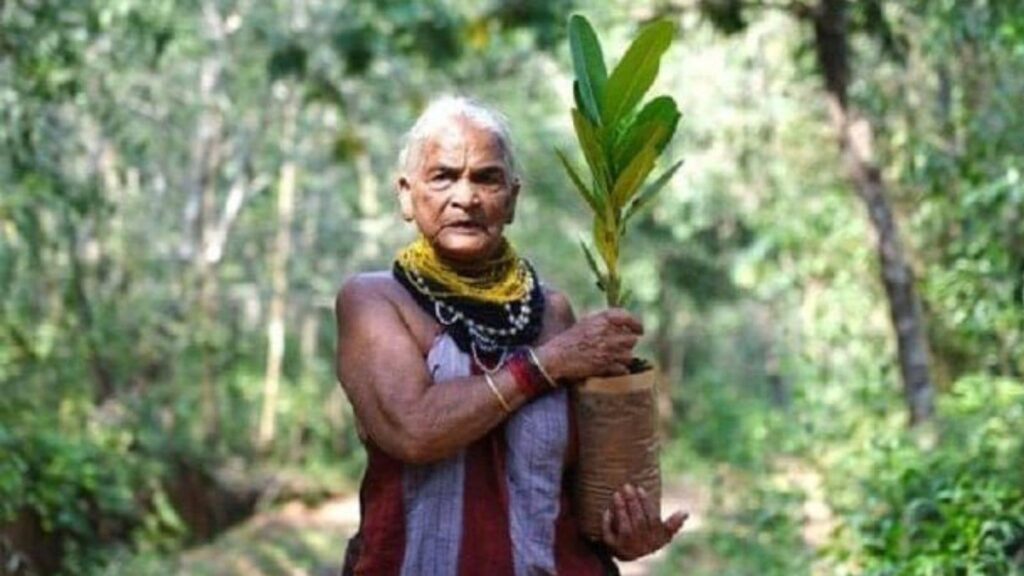
Tulsi spent over 35 years working in the Karnataka Forest Department’s nursery. She was then offered a permanent role because of her dedication. She used traditional tribal knowledge and frequently worked barefoot to plant and care for over 30,000 trees. She could identify the “mother tree” of any species and knew the exact time to collect its seeds for healthy regeneration.
Recognition Rooted in Humility
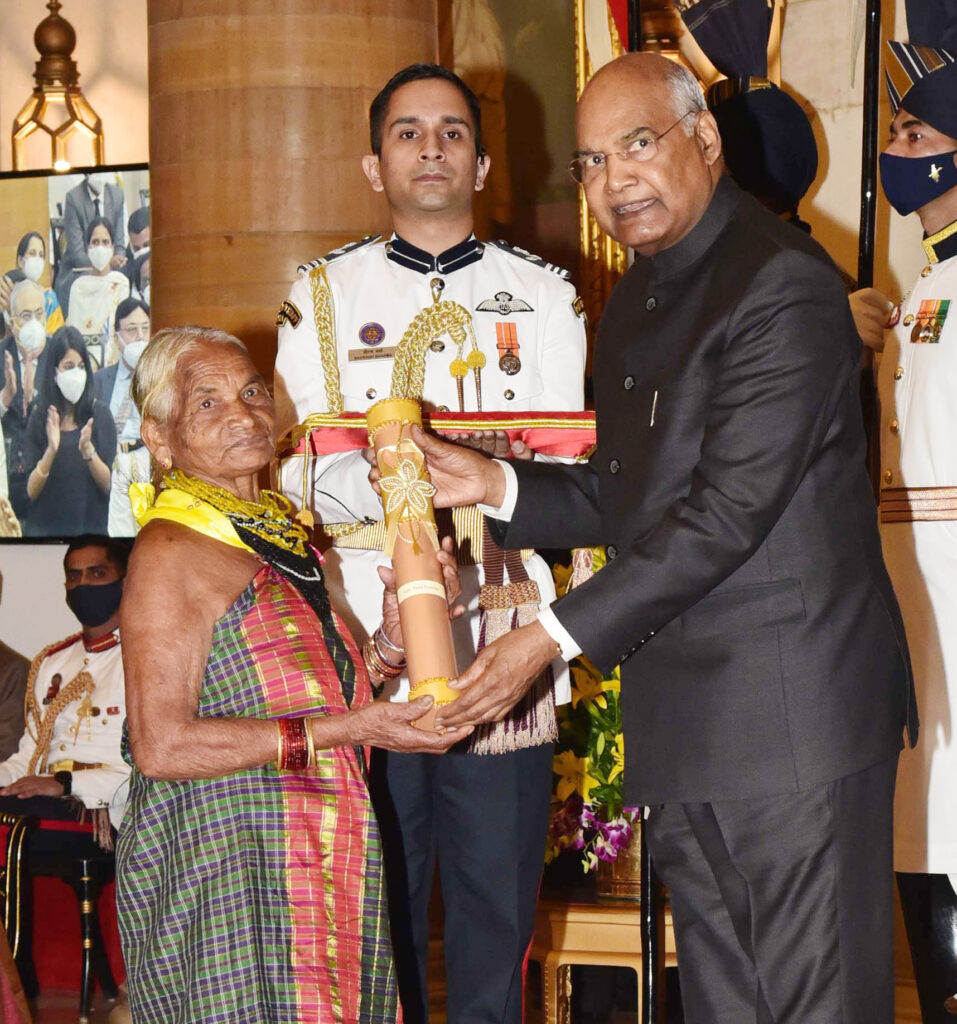
Although she carried decades of environmental wisdom, Tulsi received national recognition only in 2021. She was honored with the Padma Shri, India’s fourth-highest civilian award. Even then, she humbly said that she valued forests and trees more than awards. She had also received state and national awards like the Indira Priyadarshini Vrikshamitra Award and the Karnataka Rajyotsava Award.
“I have been planting trees since I was twelve years old. I learned everything by watching the forest, feeling the soil, and seeing how the seeds grow. Even today, I walk without shoes because I want to feel the earth. I tell the children that a tree is like a mother. It gives us air, shade, and food. If you protect the trees, they will protect you for life. We must never stop planting,” said Tulsi Gowda in an interview after receiving the Padma Shri.

A Legacy That Speaks Through Branches
Tulsi passed away on December 16, 2024, at around 86 years old. Prime Minister Narendra Modi remembered her as “a guiding light for environmental conservation.” Her efforts strengthened Karnataka’s natural landscape by extending into conservation areas, wildlife sanctuaries, tiger reserves, and community reserves. Even though she may no longer be able to travel the forest paths herself, every tree she planted and every young life she encouraged expands her legacy.
“I always explain to children that the forest must be protected and nurtured … Let children plant seeds and look after the plants as they grow,” said Tulsi.
Tulsi Gowda’s life shows us that you don’t need any degrees or loud noises to make a difference. She left her mark on a country with her quiet wisdom based in history and forests,
Also read | Padma Shri D. Prakash Rao: The Tea Seller Who Educated Slum Children