A Turning Point in the AI Story
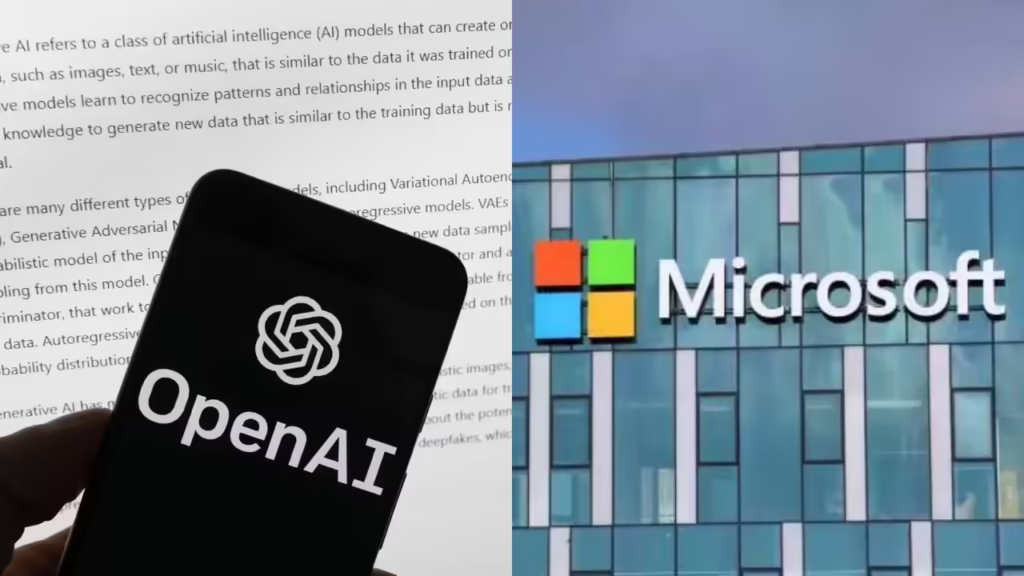
Some agreements do more than indicate business changes; they represent shifts in how technology will influence our lives. OpenAI, the company behind ChatGPT, and Microsoft, its longtime partner, have entered a non-binding agreement that sets the stage for a significant transition.
The plan is for OpenAI’s for-profit arm to become a Public Benefit Corporation (PBC). This change allows the company to raise billions for research and products while also being legally required to consider the public good along with profits. Its nonprofit parent will still have control and hold an equity stake worth over $100 billion.
For Microsoft, this deal secures a continued partnership and allows OpenAI to work with other cloud providers. For the rest of the world, it raises a question: can AI be developed responsibly on a large scale?
What a Public Benefit Corporation Means
A PBC is a hybrid model, falling between a nonprofit and a traditional business.
- Profit + Purpose: The company can pursue growth, but it must consider its broader social impact.
- Accountability: Decisions cannot ignore ethics or the long-term effects on people and society.
- Funding Flexibility: Unlike a nonprofit, it can raise significant capital, which is essential for AI’s costly research.
This structure could provide OpenAI with the best of both worlds, combining a mission-driven focus with investor support.
Why It Matters to Everyone
This agreement impacts not just investors and tech leaders; it also affects the general public.
- For users: It could result in AI tools being developed with greater responsibility and safety measures.
- For governments: It shows that even the biggest AI companies are trying out accountability models.
- For the industry: It might serve as a guide for future AI startups and labs.
The challenge will be whether the promise of “public benefit” remains when faced with commercial pressures.
Why India Should Pay Attention
India’s fast-growing digital ecosystem makes this deal especially relevant.
- Accessibility: If OpenAI tools grow responsibly, Indian startups and students may gain easier access to advanced AI.
- Policy insights: As India develops its AI regulations, the PBC model may offer lessons on balancing innovation with responsibility.
- Career opportunities: With Indian talent playing a significant role in global tech, a move toward public-good AI could create new ethical and meaningful job paths.
- Public good impact: AI could support India’s needs in education, agriculture, and healthcare, areas where technology can directly transform lives.
The Global Influence
This isn’t just about one company. If OpenAI succeeds, it could:
- Inspire other AI labs to adopt hybrid nonprofit-PBC structures.
- Rebuild trust in AI by showing it can serve more than just shareholder profits.
- Shift the balance of power by giving OpenAI more independence, even with Microsoft as a partner.
- Shape everyday experiences, from classrooms using AI tutors to farmers predicting crop yields.
The Human Side of the Deal
At the heart of this agreement is a crucial question: who is AI really for? A Public Benefit Corporation is one attempt to answer this. It’s a structure that seeks to embed values into the core of a business. However, words on paper don’t ensure real actions. The world, including India, will be paying close attention. When the time comes for a choice between profits and public good, which path will OpenAI take?